Why We Collar Block HDPE Pipes at the Yard — Not on Site
Collar blocking HDPE pipes into precast concrete pits before they leave the yard saves hours on site and eliminates a common source of installation headaches. Here is how we do it and why it matters.
When a contractor receives a precast concrete pit on site, the last thing they want to be doing is wrestling a large-diameter HDPE pipe into a block-out opening in a tight excavation, trying to get the collar seal right while the machine is waiting and the crew is standing around. That is exactly the situation collar blocking at the yard is designed to avoid.
At Milcast, we offer collar blocking of HDPE pipes into precast pits as part of our standard supply service. The pipe is fitted and sealed into the pit wall before the unit leaves our Finley yard — so when it arrives on site, the pipe is already in, already sealed, and the contractor can focus on placement and connection rather than fabrication.
What Is Collar Blocking?
Collar blocking is the process of fitting a pipe through the wall of a precast concrete structure so that the pipe is held firmly in place and the joint between the pipe and the concrete is watertight. For HDPE corrugated pipes — the black corrugated plastic pipe widely used in drainage and irrigation applications — this typically involves:
- Forming or cutting a block-out in the pit wall to the correct diameter
- Inserting the HDPE pipe through the block-out
- Sealing the annular gap between the pipe and the concrete with a purpose-made collar seal or grout
When this is done in a yard environment, the work is straightforward. The pit is on a flat, stable surface. The pipe can be positioned accurately. The seal can be applied and inspected properly before the unit is moved. There is no time pressure, no machine waiting, and no excavation to work around.
When the same work is done on site — in a hole, with the pit already placed, under schedule pressure — the quality of the outcome is much harder to control.
The On-Site Problem
Fitting a large-diameter HDPE pipe through a pit wall in an excavation is genuinely difficult work. The pipe is heavy and awkward. The block-out needs to be aligned with the incoming pipe run, which means the pit needs to be positioned precisely before the pipe can be fitted — but the pipe position also affects where the pit needs to sit. Getting this right in a tight excavation, with a machine, takes time.
The seal is the other issue. A collar seal between HDPE and concrete needs to be installed correctly to be effective. In a clean yard environment, this is a controlled process. In a muddy excavation, with water potentially present and time pressure on the crew, it is much harder to get right. A poor seal means water ingress, which means problems down the track.
How We Do It at the Yard
At Milcast, collar blocking is done before the pit leaves the yard. The process is straightforward:
-
Block-out formed during casting — where possible, the block-out for the HDPE pipe is formed into the pit wall during the original pour, sized to suit the specific pipe diameter being used. This gives a clean, accurate opening with the right dimensions.
-
Pipe fitted and positioned — the HDPE pipe is inserted through the block-out and positioned to the correct protrusion length, based on the contractor's requirements for the specific installation.
-
Collar seal installed — the annular gap between the pipe and the concrete is sealed with a purpose-made HDPE-to-concrete collar seal. This is inspected before the unit is moved.
-
Unit delivered ready to place — the pit arrives on site with the pipe already fitted. The contractor places the pit, connects the incoming and outgoing pipe runs, and moves on.
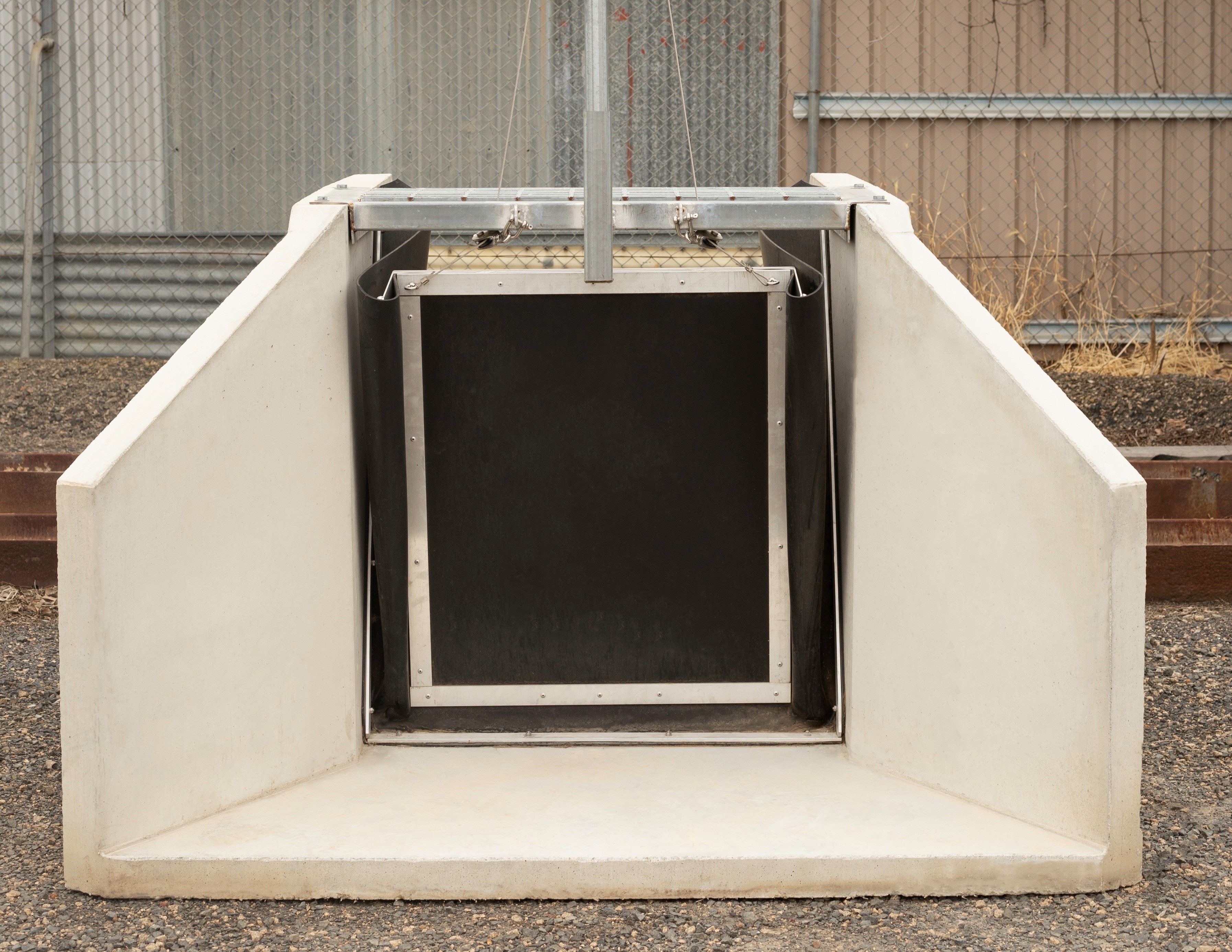
The photo above shows a typical example straight from our Finley yard — a precast concrete pit with a 600mm corrugated HDPE pipe collar blocked through the wall, ready for delivery. The pipe protrudes to the length specified by the contractor, and the collar seal is in place.
Time Saved on Site
The time saving on site is real and consistent. Fitting a large-diameter HDPE pipe in an excavation typically takes a crew the better part of a morning, including the time to get the alignment right, fit the seal, and check the result. When the pipe is already in the pit, that work is eliminated entirely.
For contractors running tight programs — irrigation district upgrades, civil drainage projects, on-farm infrastructure — that time adds up across a job. Multiple pits, each with one or more pipe connections, each saving half a day of on-site labour, represents a meaningful reduction in program duration and cost.
Which Pipes and Pits Does This Apply To?
Milcast can collar block HDPE corrugated pipe into most of our standard pit and riser range. Common applications include:
- Drainage pits — inlet and outlet connections for stormwater and agricultural drainage systems
- Irrigation pits — connections to HDPE irrigation mains and laterals
- Offtake pits — connections to channel offtake pipework
- Custom structures — made-to-order pits with specific pipe sizes, positions, and protrusion lengths
Pipe diameters from 300mm through to 750mm and larger are routinely handled. Multiple pipes in a single pit — inlet on one face, outlet on another — are also straightforward to accommodate.
Specifying Collar Blocking on Your Order
When ordering pits from Milcast, simply advise us of the pipe diameter, the pipe brand (so we can match the block-out to the correct outside diameter), the required protrusion length on each face, and the number of connections per pit. We will confirm the details and include the collar blocking in the supply.
If you are working from a design that specifies the pipe positions, send us the drawing and we will work from that directly.
For more information or to discuss your project requirements, contact the Milcast team in Finley on 03 5888 3051 or email sales@milcast.com.au.
Explore Topics
Written by
Milcast Team
Content creator and writer sharing insights and stories.


