Bay Outlets: Choosing the Right Size for Your Channel
Selecting the wrong bay outlet size is a costly mistake. This guide walks through the key factors — flow rate, head, channel geometry — that determine the right product for your farm.

Bay outlets are one of the most common structures on an irrigation farm, and one of the most frequently under-specified. Getting the size wrong — too small and you cannot get your water allocation off in time; too large and you lose control of flow and risk erosion downstream.
This guide covers the key factors that determine the right bay outlet for your channel and farm layout.
What Does a Bay Outlet Do?
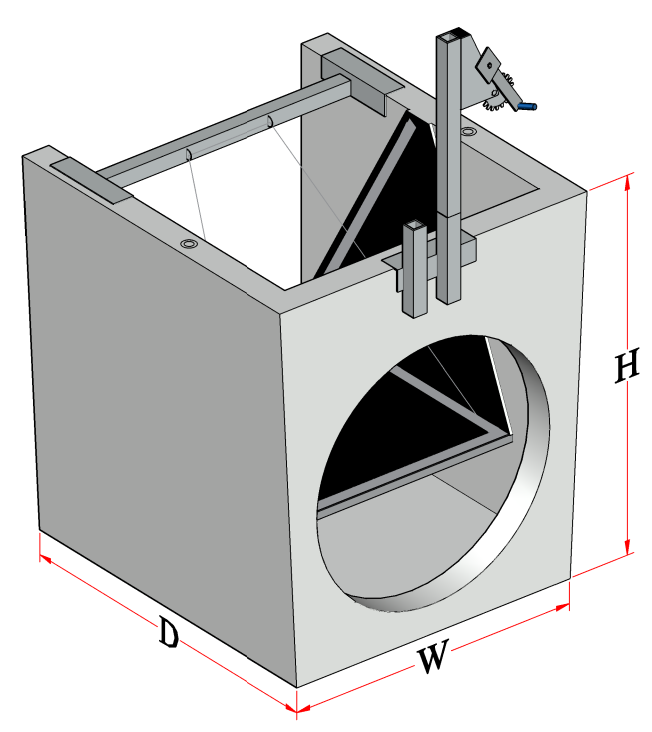
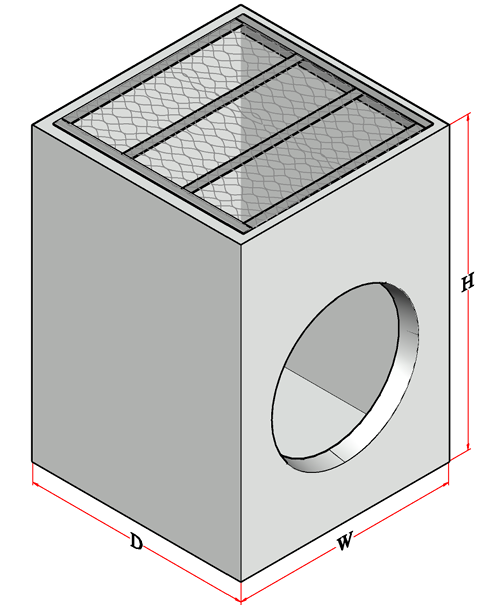
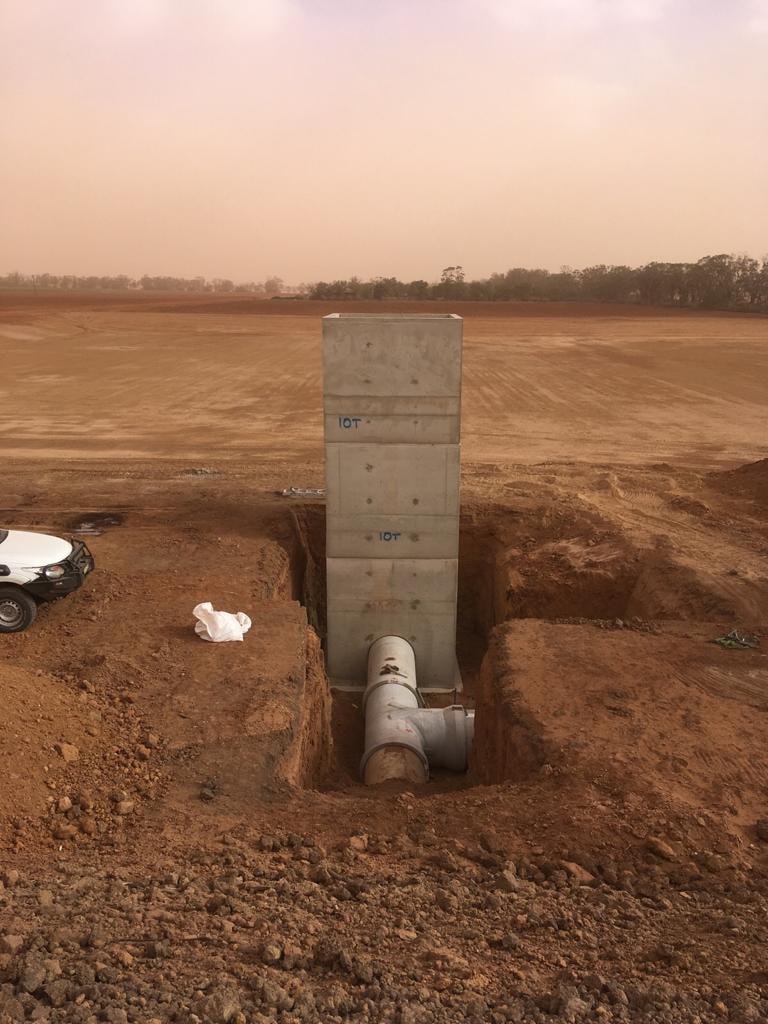
A bay outlet is a precast concrete structure installed through the bank of an irrigation channel to allow water to be drawn off into a bay or field. It typically consists of a concrete barrel, an inlet with a gate or slide, and an outlet apron or headwall on the field side.
The gate controls flow — open it to irrigate, close it to shut off. Simple in concept, but the hydraulics behind sizing it correctly are worth understanding.
The Key Sizing Variables
1. Required Flow Rate
How much water do you need to deliver to the bay in a given time? This is usually expressed in megalitres per day (ML/day) or litres per second (L/s). Your water allocation and the area of the bay you are irrigating will determine this.
A common rule of thumb for flood irrigation of rice or pasture is 1–2 L/s per hectare, but this varies with soil type, crop, and irrigation method. Talk to your irrigation district or an agronomist if you are unsure.
2. Operating Head
The operating head is the difference in water level between the channel and the field at the time of irrigation. This drives the flow through the outlet.
Higher head means more flow for a given outlet size — but it also means more velocity at the outlet, which can cause erosion if not managed with a proper apron or headwall. Lower head means you need a larger outlet to achieve the same flow rate.
Head varies through the irrigation season as channel levels fluctuate, so it is worth sizing for the minimum expected head to ensure you can always get your water off.
3. Channel Bank Geometry
The width and height of the channel bank determines what barrel length you need. A standard Milcast bay outlet barrel is designed to suit typical Riverina channel bank dimensions, but we can supply extended barrels for wider banks or non-standard profiles.
The invert level of the outlet — the height of the bottom of the barrel — also matters. Set it too high and you cannot drain the bay fully; too low and you risk drawing silt into the outlet.
4. Gate Type
Milcast bay outlets are available with a range of gate options:
- Slide gates — the standard option, simple and reliable
- Flap gates — self-closing when channel pressure drops, useful for preventing backflow
- Screw-operated gates — for larger outlets where manual operation of a slide is impractical
The gate size is matched to the barrel size, so selecting the right barrel is the first step.
Standard Milcast Bay Outlet Sizes
Our standard range covers the most common flow requirements for Riverina irrigation farms. The most popular sizes are:
- ABO6 — suited to small bays and low-flow applications
- ABO9 — the workhorse of the range, suitable for most standard bay layouts
- ABO12 — for larger bays or where higher flow rates are required
We also manufacture custom sizes for non-standard applications. If your channel geometry or flow requirements fall outside the standard range, contact us to discuss options.
Common Mistakes to Avoid
Undersizing for peak demand. If you are trying to irrigate a large bay in a short window — say, overnight — you need enough flow capacity to do it. An undersized outlet means you either irrigate too slowly or have to run the bay for longer, increasing labour and water losses.
Ignoring the outlet apron. The apron on the field side of the outlet dissipates the energy of the water as it exits the barrel. Without an adequate apron, you will get scour and erosion at the outlet, which can undermine the structure over time.
Setting the invert too high. If the outlet invert is above the natural ground level of the bay, you will have a step at the outlet that concentrates flow and causes erosion. The invert should be set at or slightly below the bay floor level.
Getting It Right the First Time
A bay outlet is a long-lived asset — properly installed, it should last the life of the farm. Getting the sizing right at the start avoids costly modifications later.
If you are unsure about sizing for your application, our team in Finley is happy to talk through your requirements. We work with irrigators across the Riverina every day and can advise on the right product for your channel and farm layout.
Call us on (03) 5888 3051 or request a quote through our website.
Explore Topics
Written by
Milcast Team
Content creator and writer sharing insights and stories.