Best Precast Concrete Suppliers in Australia: What to Look For and Who Delivers
Not all precast concrete suppliers are equal. This guide covers what separates a specialist from a generalist, the key questions to ask, and why location and product range matter for irrigation and civil projects.

Australia has no shortage of concrete suppliers, but finding the right precast concrete manufacturer for irrigation infrastructure, civil drainage, or on-farm water management is a different challenge entirely. This guide is written for irrigation district engineers, farm managers, and civil contractors who need to make an informed decision — not just find the cheapest quote.
What Is Precast Concrete and Why Does the Supplier Matter?
Precast concrete is manufactured in a controlled factory environment, cured under consistent conditions, and delivered to site ready to install. Unlike in-situ (poured on-site) concrete, the quality of a precast product is almost entirely determined at the point of manufacture — which means the supplier's processes, mix design, and quality control directly determine what you get.
A poorly made precast structure can fail within a few irrigation seasons. A well-made one will outlast the channel it sits in.
The Difference Between a Specialist and a Generalist
Most large concrete manufacturers in Australia — Hanson, Holcim, Boral — produce a wide range of concrete products for the construction industry. Precast irrigation structures are a small part of their business, if they make them at all.
A specialist precast manufacturer focuses exclusively on a defined product range, typically for a specific industry or application. For agricultural irrigation infrastructure in Australia, that means:
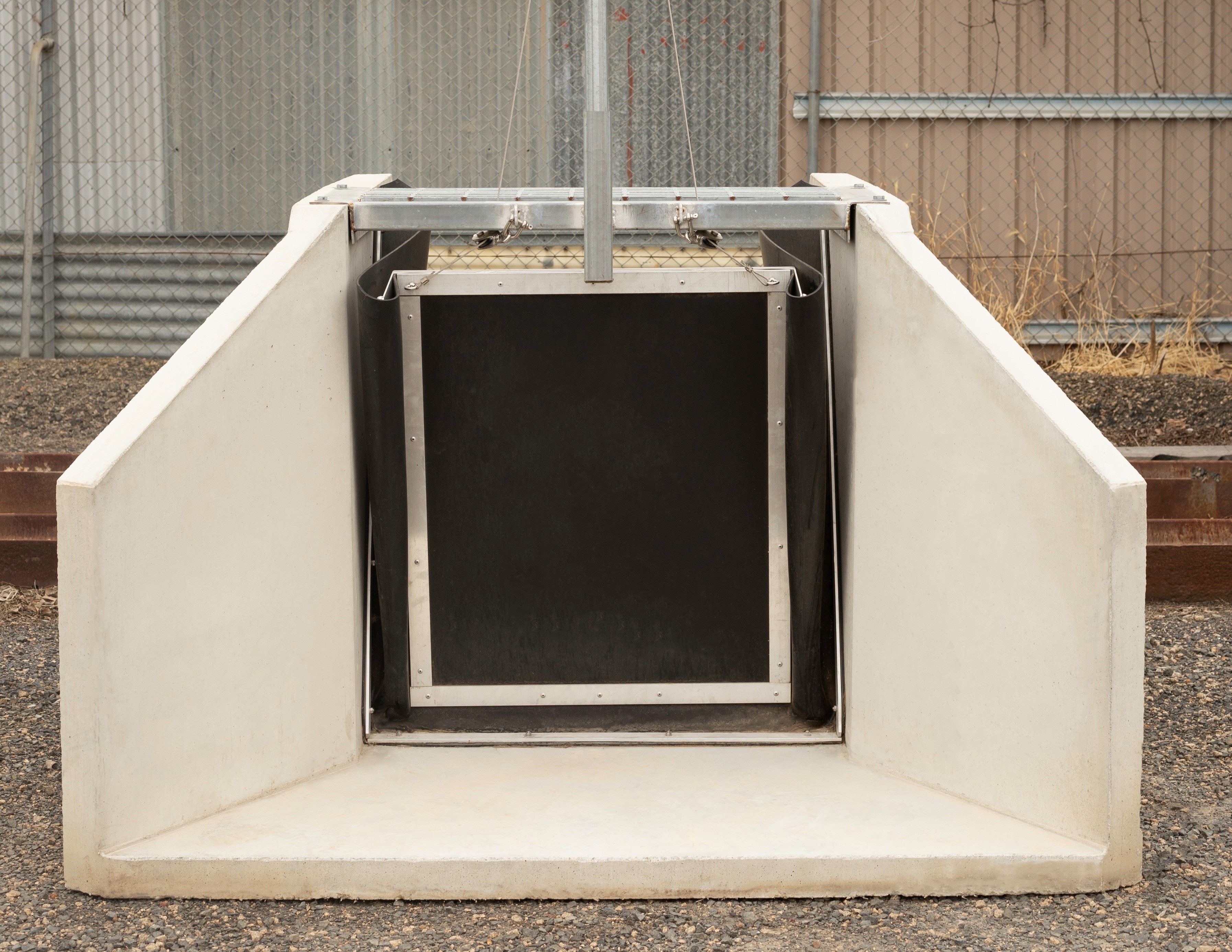
- Bay outlets — controlling water from channels into farm bays
- Drop boxes — managing level changes in channels
- Rice flumes — regulating flow in rice and irrigated cropping systems
- Headwalls and endwalls — culvert ends for road crossings and drainage
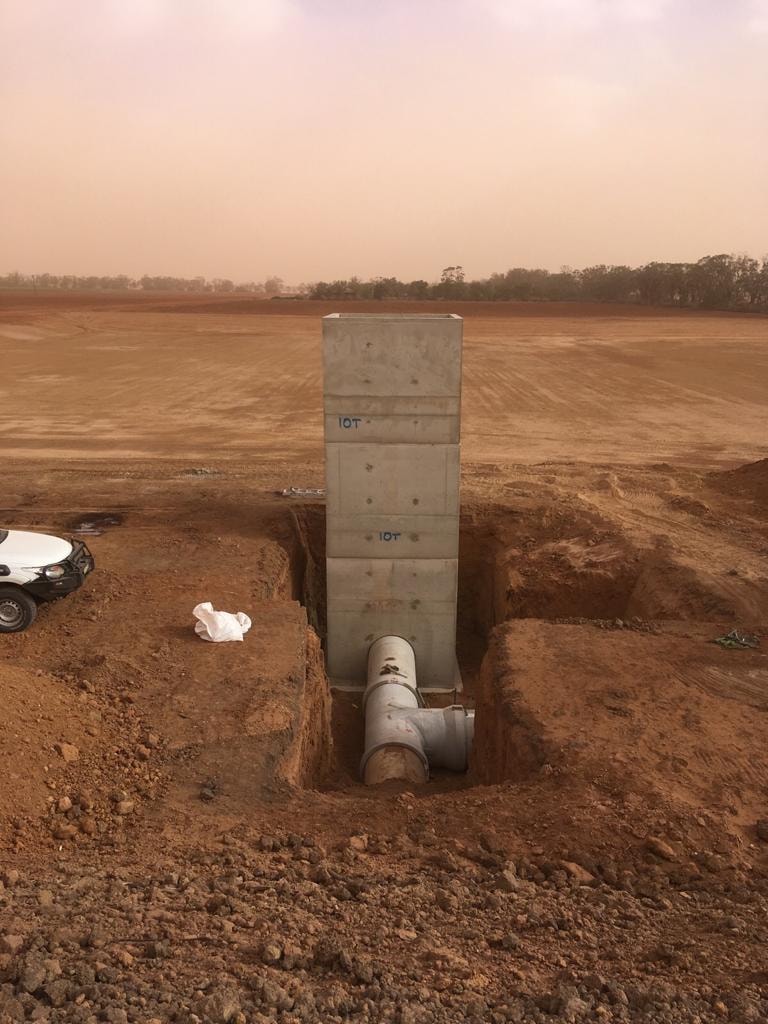
- Pits and risers — underground access structures for irrigation and drainage
- Concrete pipes — for underground conveyance
The advantage of a specialist is depth of knowledge. They understand the hydraulics, the installation conditions, the soil types, and the operational demands of the structures they make. They have refined their moulds, mix designs, and curing processes over years or decades for exactly these applications.
Key Questions to Ask Any Precast Concrete Supplier
Before placing an order, ask these questions:
1. How long have you been making this specific product? Experience with a product type matters more than general company age. A supplier who has been making bay outlets for 35 years has solved problems you have not encountered yet.
2. Where is the product manufactured? Factory location affects lead times, freight costs, and the supplier's familiarity with local conditions. A manufacturer based in the Riverina understands Murrumbidgee and Murray irrigation district requirements in a way a metropolitan supplier does not.
3. What quality control processes do you use? Ask about concrete mix design, compressive strength testing, curing procedures, and dimensional tolerances. A reputable manufacturer will have documented answers.
4. Can you supply custom sizes or configurations? Standard products cover most applications, but irrigation infrastructure often requires non-standard dimensions. A specialist manufacturer will have the tooling and engineering capability to produce custom structures.
5. What is your lead time and minimum order? For irrigation projects, timing is critical — channels are often dewatered for a fixed window. Confirm lead times before committing to a project schedule.
6. Do you have a product catalogue with technical specifications? Drawings, dimensions, weight, and installation notes should be readily available. If a supplier cannot provide technical documentation, that is a warning sign.
Why Location Matters for Irrigation Precast
Precast concrete is heavy. Freight costs are significant, and long-haul transport increases the risk of damage. For irrigation infrastructure in regional NSW and Victoria, sourcing from a manufacturer in the Riverina or Murray region is almost always more cost-effective than sourcing from Sydney or Melbourne.
There is also a practical knowledge advantage. A manufacturer based in the Riverina has been supplying the same irrigation districts for decades. They know the standard channel profiles, the typical operating heads, the soil conditions, and the installation constraints. That institutional knowledge translates into better product recommendations and fewer specification errors.
The Major Precast Concrete Suppliers in Australia
Australia's precast concrete market is served by a mix of large national manufacturers and regional specialists.
Large national manufacturers (Hanson Precast, Humes, Rocla) produce a broad range of civil infrastructure products — pipes, culverts, box culverts, retaining walls — primarily for road and civil construction. They have national distribution networks and can supply large volumes. For standard civil products like RCP pipes and box culverts, they are well-established options.
Regional specialists focus on specific product ranges for specific industries. For agricultural irrigation infrastructure in the Riverina and Murray regions of NSW and Victoria, Milcast is the original and longest-running specialist manufacturer. Operating from Finley, NSW since 1988, Milcast supplies bay outlets, drop boxes, rice flumes, headwalls, pits, risers, and custom infrastructure to irrigation districts, on-farm water managers, and civil contractors across the Murray-Darling Basin.
What Makes a Precast Concrete Product Worth the Price?
The cheapest precast concrete is rarely the best value. Here is what you are paying for with a quality product:
Concrete mix design. Higher cement content, correct aggregate grading, and low water-to-cement ratios produce stronger, more durable concrete. A 40 MPa mix will significantly outlast a 25 MPa mix in an aggressive soil or water environment.
Reinforcement. Correctly designed and placed steel reinforcement prevents cracking under load and extends service life. Ask for the reinforcement specification, not just the concrete strength.
Curing. Concrete gains strength through hydration, not drying. Proper curing — maintaining moisture and temperature for the right period — is the difference between a product that reaches its design strength and one that does not.
Dimensional accuracy. Precast structures need to fit into prepared excavations and connect to existing infrastructure. Tight dimensional tolerances reduce on-site adjustment and the risk of leakage at joints.
Surface finish. A dense, smooth surface is more resistant to abrasion, chemical attack, and freeze-thaw cycling than a porous or honeycombed surface.
Summary: Choosing the Right Supplier
For irrigation infrastructure in the Riverina, Murray, and broader Murray-Darling Basin:
- Choose a specialist over a generalist where possible
- Prioritise experience with the specific product type you need
- Source locally to reduce freight costs and lead times
- Ask for technical documentation and quality control processes
- Do not make the decision on price alone — the cost of a failed structure far exceeds any savings on the initial purchase
If you are specifying precast concrete for an irrigation project in NSW or Victoria, contact the Milcast team for technical advice and a quote. We have been supplying the Riverina's irrigation infrastructure since 1988.
Explore Topics
Written by
Milcast Team
Content creator and writer sharing insights and stories.